
2026 IVCA Awards
Lee Shapiro Receives the 2026 Stanley C. Golder Award
The 7wire Ventures co-founder and former Livongo CFO on building Chicago’s health technology ecosystem, leading through uncertainty, and why relationships matter most.
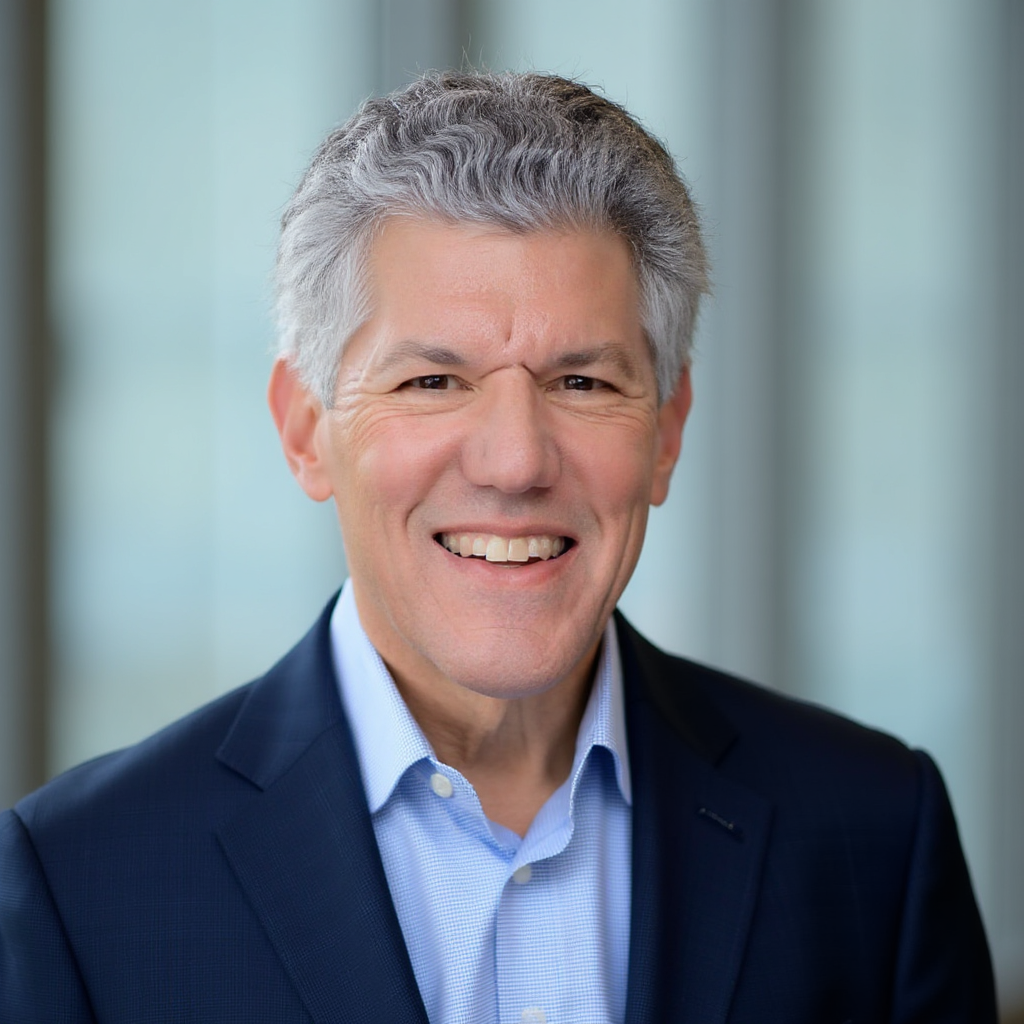
Recipient, 2026 Stanley C. Golder Award
Lee Shapiro learned one of the most important lessons of his investing career in a Chicago clothing store. Watching his father, Sidney, build the Syd Jerome clothing store, he saw that a business is built “one relationship at a time.” Decades later, that lesson underpins 7wire Ventures, the health technology investment firm he co-founded with Glen Tullman in 2011.
On December 7, the Illinois Venture Capital Association will present Shapiro with the 2026 Stanley C. Golder Award at the IVCA Annual Awards Dinner.
For nearly three decades, Shapiro has helped build Illinois’ venture capital and health technology ecosystem, first as an operator and for the past 15 years as an investor. As President of Allscripts, he helped grow revenue from $120 million to $1.45 billion and closed $4 billion in acquisitions. As CFO of Livongo Health, he led the company’s 2019 IPO and its $18.5 billion merger with Teladoc, a landmark deal that put Chicago-built health technology on the national map. Since its founding, 7wire has backed dozens of digital health companies, including Livongo and Transcarent.
“For more than 25 years, Lee has shown that Illinois can build, fund, and scale companies that change health care. He has done it with integrity and generosity, and our industry is stronger for it.”
— Alyssa Jaffe, Partner, 7wire Ventures
Career at a Glance
Shapiro earned a bachelor’s degree in accounting from the University of Illinois and a J.D. from the University of Chicago Law School. He began his career in law before taking on executive roles in finance, real estate and healthcare technology, including President of Allscripts and CFO of Livongo Health.
He serves on the boards of PayZen, Jasper, FOLX, Override, Parsley and Karoo, and is an advisor to the Kellogg Innovation Network and the University of Chicago Innovation Fund. He is the 2025–27 volunteer chairperson of the board of the American Heart Association.
In His Own Words
The Stanley C. Golder Award recognizes your significant contributions to the investment industry. You’ve spent your career at the intersection of investing, healthcare and innovation. What excites you most about the opportunities being created today in healthcare and health technology?
For the last 30 years, my 7wire co-founder Glen Tullman and I have been working to make health and care both more accessible and affordable … at the same time. For decades, those two goals were a trade-off — you could expand access, but it cost more, or you could cut costs, but people got less. That’s changing.
Technology now extends the reach of care to meet people where they are … in their homes, on their phones, between doctor visits, and in underserved communities. Someone managing diabetes or hypertension in a rural town can get the same expert support as someone living next to a major academic medical center.
When care is continuous and proactive, rather than episodic and reactive, it costs less. We catch problems earlier, avoid unnecessary hospitalizations, and give people what they need to manage their own health. At 7wire, we look for companies that deliver a better consumer experience, measurably improve outcomes, and generate a return on investment for whoever is paying for care. When you get all three right, access and affordability reinforce each other. That opportunity is bigger today than at any point in my career.
When you co-founded 7wire, what experiences or lessons from earlier in your career proved most valuable in building the firm?
Some of the most valuable lessons came long before my career started. They came from watching my father Sidney build his retail business, which was called “Syd Jerome” in Chicago.
My father taught me that a business is built one relationship at a time. He knew his customers, remembered what mattered to them, and earned their trust over years, not just their transactions. He was the “Haberdasher to the Stars” — with clientele including politicians, athletes, business leaders and more — but treated every customer like they were the star. He also understood that reputation is the most valuable asset you own, and that it’s earned through consistency … by showing up, keeping your word, and standing behind what you sell.
My father was an entrepreneur in the truest sense. He took risks, yet grew sales, year over year for over 50 years. Those lessons shaped how Glen Tullman and I built 7wire. Our team thinks of ourselves as partners to the founders of businesses, not just investors. We’re in it for the long term, we try to be the first call when things get hard, and we know that our reputation with entrepreneurs is everything. My operating experience at Allscripts and Livongo taught me how to scale companies.
But it was my father taught me why relationships matter most.
You played a key leadership role during Livongo’s IPO and subsequent merger with Teladoc. What did that experience teach you about leadership and decision-making during periods of extraordinary change?
It taught me that the moments of greatest uncertainty are often when clear and decisive leadership matters most, and that you have to be ready to act before you have perfect information.
After Livongo went public, we kept executing. We completed a successful secondary offering and a convertible note issuance, which strengthened our balance sheet and gave us flexibility. Then came the merger with Teladoc, which we negotiated and completed in the middle of the COVID pandemic. We were making one of the most consequential decisions in the company’s history while the world was shut down, markets were volatile, and our team was under significant personal stress.
But a few lessons stayed with me. Preparation creates options … because we had strengthened our capital position, we could make strategic decisions from a position of strength rather than necessity. Conviction has to be grounded in mission. We believed combining with Teladoc would help us reach far more people with a broader offering, and that clarity of purpose made a complex decision simpler. The strength of the Livongo team and its board is what made our success possible.
That merger was recognized as putting Chicago-based health technology and innovation on the national healthcare commerce map. What strengths do you believe continue to distinguish the region’s entrepreneurial and investment ecosystem?
The Chicago metro area has something that’s hard to replicate: we have proximity to players in the entire healthcare system. We have world-class academic medical centers, major health systems, national payers, life sciences and medical device companies. These are industry leaders, and some of the largest employers in the country … it’s all within reach right here.
We also have deep operating talent. Many of the people building and running health tech companies today learned their craft at large Chicago healthcare and technology businesses, and they bring a discipline about building real, sustainable businesses. The legendary Baxter “Network” is one example.
Chicago’s ecosystem is collaborative. Founders help founders, investors share deal flow, and successful entrepreneurs reinvest their time and capital back into the next generation. Livongo benefited from that — we had many people who worked with us in prior companies join us there — and it’s gratifying to see so many former Livongo team members go on to start or lead companies. That flywheel of experience, capital, and mentorship is what keeps building on itself, and it’s why I’m optimistic that there will be a bright future for the region.
“The moments of greatest uncertainty are often when clear and decisive leadership matters most.”
Lee Shapiro
AI and other emerging technologies are rapidly changing healthcare. Which innovations do you believe have the greatest potential to improve patient outcomes over the next decade?
AI is transformational, and for healthcare, the biggest opportunity is in the leverage consumers and providers receive from riding AI’s rails.
There are three areas with enormous potential …
The first is continuous, personalized care for chronic conditions. Connected devices, combined with AI, turns data into timely, individualized guidance and can help people manage diabetes, hypertension, heart disease, and other chronic conditions every day, not just a few times a year in a doctor’s office.
The second is giving clinicians their time back. Administrative burden is one of the biggest drivers of burnout. AI that handles documentation, prior authorization, and care coordination lets doctors and nurses focus on patients, and that will improve care.
The third is earlier detection and prediction, identifying who is at risk before a crisis happens, whether that’s a heart attack, a hospital readmission, or a mental health decline.
The critical element for any of this to succeed is trust. These tools must be safe, validated, transparent, and equitable. Getting this right is as important as getting the technology right, and that’s where health systems, innovators, and investors need to work together.
You are currently the chairperson of the board of the American Heart Association (AHA). What have you learned about the role business and investment leaders can play in advancing public health and improving lives?
The American Heart Association has extraordinary scientific credibility and a century of trust. What business leaders can add are the relationships with employers and industry, and a willingness to bring forward new approaches that can reach millions of people. Some of the most meaningful progress happens when the science of the AHA intersects with the private sector.
I’ve also learned that employers are among the most powerful public health actors in the country. They influence the health of tens of millions of employees and families every day. When business leaders make cardiovascular health and well-being a priority, it moves the needle. The AHA’s CEO Roundtable brings together Fortune 500 business leaders with a common goal of improving health for all.
My time serving the AHA has reinforced for me that the best investments create both value and impact. Heart disease and stroke remain leading causes of death, and much of that burden is preventable. If we can bring together scientific rigor, innovation, and capital, we can help people live longer, healthier lives.
What advice would you give to founders who are building the future in healthcare today?
Start with the problem, not the technology. The best healthcare companies are built by founders who deeply understand the person they’re serving, whether that’s the patient, the clinician, or the organization paying for care … and who obsess over making that person’s life better. We often back founders with lived experience with the problem that they are addressing.
Second … prove it. Healthcare buyers rightly demand evidence, so build outcomes measurement and ROI into your company from day one, because that’s what earns trust and drives adoption.
And third … be patient but persistent. Healthcare moves slower than other industries. The founders who succeed are the ones who stay true to their mission, build strong relationships, and keep going when it gets hard.
What does receiving the IVCA’s Stanley C. Golder Award from your peers in the Illinois investment community mean to you personally?
It’s deeply meaningful, and humbling. Stanley Golder helped build the foundation of Chicago’s private equity and venture community, and to receive an award bearing his name, from the peers I respect, is an honor. I feel the responsibility this award carries to invest in the next generation of entrepreneurs who will make this region, and healthcare, even better.
This community has shaped my career. I am a Chicago Public School kid, University of Illinois grad and University of Chicago Law School alum. The investors, founders, and operators here have been partners, mentors, and friends. Chicago gave me the opportunity to help build companies that improved people’s lives, and this award reflects the work of so many people I have had the honor of working with … Glen Tullman; my colleagues at 7wire Ventures; the friends I made at Livongo and Allscripts; and the entrepreneurs we’ve had the privilege to back.
I also think about my father, who built his business in Chicago and showed me what it means to create something lasting. He started “Syd Jerome” in 1958, and my brother carries on the tradition today. But none of what I have accomplished could have been possible without the support of my wife, Valerie, who has been my partner every step of this journey. I am so very grateful.
Join Us December 7
The 2026 IVCA Annual Awards Dinner, presented by Kirkland & Ellis LLP, takes place Monday, December 7, from 5:00 to 9:30 p.m. in the Grand Ballroom of the Four Seasons Hotel Chicago, 120 East Delaware Place. Details and registration →