
2026 IVCA Awards
Philip Alphonse Receives the 2026 Stephen S. Beitler Award
The Vistria Group founding partner and former IVCA Chairman reflects on operational discipline, the future of education and workforce investing, and why “investing is an apprenticeship.”
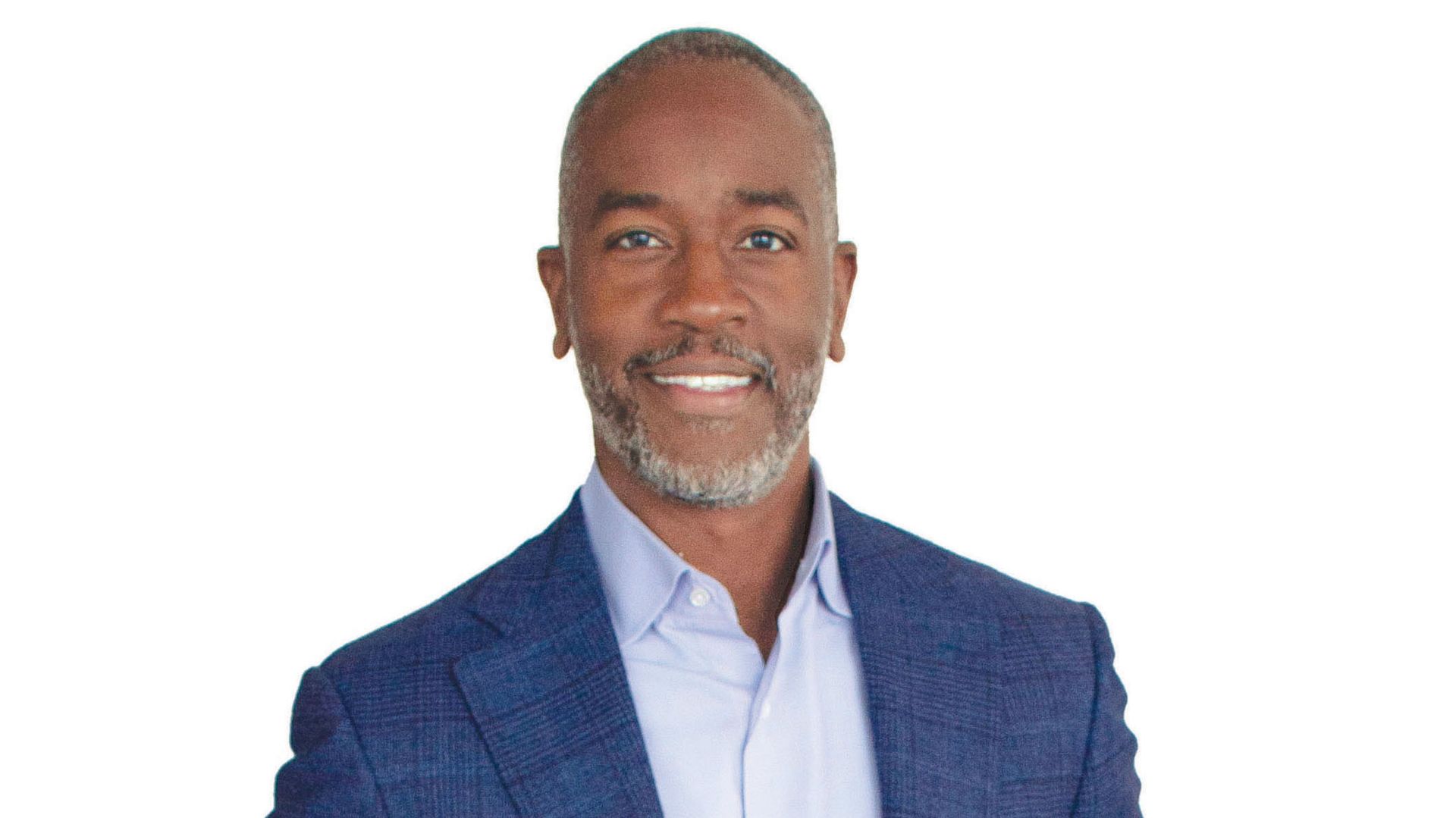
Recipient, 2026 Stephen S. Beitler Award
Philip Alphonse learned one of his most lasting investing lessons from a company that didn’t survive. After business school, he joined a Silicon Valley education technology startup that ultimately failed, an experience he calls “humbling, but extraordinarily instructive.” Its lesson about the role of operational excellence in scaling a business has shaped his career ever since. That includes helping launch The Vistria Group as a founding partner and co-leading its education and workforce investing practice.
On December 7, the Illinois Venture Capital Association will honor Alphonse with the 2026 Stephen S. Beitler Award at the IVCA Annual Awards Dinner. He is the second recipient of the award since it was renamed from the IVCA Fellows Award.
The honor recognizes nearly a decade of leadership within the association. Alphonse joined the IVCA Board of Directors in 2016, served as Vice Chairman in 2023–24 and as Chairman in 2024–25. He has been a driving force behind the growth of the IVCA Scholars Program and the IVCA Foundation.
Career at a Glance
Alphonse is a Senior Partner and Co-President of Flagship Funds at The Vistria Group, a middle-market private investment firm with deep sector expertise across essential industries and more than $18 billion in assets under management. A founding partner of Vistria, he co-leads its Knowledge & Learning Solutions practice, which includes 10 portfolio companies with combined revenue of more than $4.5 billion. He currently serves on the boards of Soliant, MGT, Really Great Reading, ESS and Edmentum, and previously served on the boards of MSI Information Services, FullBloom and Penn Foster.
Before joining Vistria, Alphonse was a Principal at Sterling Partners, where he focused primarily on education investments and served as a director of Educate, Inc., Educate Online and InfiLaw Holding, LLC. Earlier, he worked at Knowledge First, Thomas Weisel Partners, McCown De Leeuw & Co. and Musa Capital Advisors Ltd. (Kingdom Holdings). He began his career as an investment banker at Morgan Stanley & Co. He holds an A.B. from Harvard University and an M.B.A. from the Stanford Graduate School of Business.
Alphonse serves on the boards of P33 Chicago, The Field Museum and ETS. He previously served on the board of the University of Chicago Medical Center, as a mayoral appointee to the City of Chicago’s Community Development Commission, and as a trustee and Executive Committee member of The Roxbury Latin School in Boston. He and his wife, Rene, have three children: Zoe, Quincy and Grace.
In His Own Words
As the second recipient of the IVCA’s Stephen S. Beitler Award, what does this recognition mean to you personally and professionally?
It is a tremendous honor, particularly because it comes from a community that has been such an important part of my professional life. Chicago has been home for most of my investing career, and the IVCA has played an important role in bringing together the people and institutions that have made Illinois a great place to invest, build companies and create jobs.
IVCA was founded over 25 years ago with a mandate to support the investment firms that drive private-sector job growth, advocate for the PE and VC community, and create pathways for underrepresented talent through programs like the IVCA Scholars. I am humbled to follow in the footsteps of founders like Stephen S. Beitler. I am also excited about the future prospect of the Illinois investment community, which has fully supported the mandate of IVCA.
Looking back on your career, what experiences most shaped your leadership approach as an investor and executive?
After business school, I joined a Silicon Valley–based education technology startup that ultimately failed. It was humbling, but extraordinarily instructive. Experience matters, and this event for me heightened the importance of operational excellence in the scaling of any business. Part of our model at Vistria is leveraging operational expertise, which I fully value and believe to be a very important driver for investment performance.
Partnership also matters. Investing has taught me that the best outcomes rarely come from capital alone. They come from genuine alignment with founders and management teams, a willingness to listen, and a clear understanding of what makes a business special before trying to change it. Recruiting in thoughtful partners with complementary skill sets and backgrounds for our boards is also very important. Over time, I have learned that partnering with high-quality management teams and board members is the foundation for better outcomes.
Your investment career has focused on education and workforce development. Where do you see the greatest opportunities to drive meaningful impact in those sectors today?
Administrators running both K-12 and post-secondary systems are facing a number of challenges. We see a long tail of opportunities in building preferred providers of solutions that help school leadership drive better outcomes and operate at higher levels of efficiency. Supporting this sector in sourcing specialized talent in teaching, clinical areas and even technology is a massive win-win opportunity set.
I am also encouraged by the growing focus on what works. In K-12 education, the movement toward evidence-based literacy instruction, such as the Science of Reading, is an important example. There is also much greater recognition that a four-year college degree cannot be the only pathway to economic opportunity. We are seeing employers, community colleges, universities and workforce organizations develop more flexible pathways built around credentials, apprenticeships and skills that connect more directly to employment.
Technology and artificial intelligence also present an unbelievable opportunity to either disrupt or accelerate the position of incumbents in these markets. For most of our portfolio, we see a material opportunity to be an early adopter of AI and deliver a higher quality of service to our school and employer partners.
What makes a company stand out as an attractive investment opportunity in the education and workforce development sectors?
First, we do a tremendous amount of thematic work to make sure that the market fundamentals support the time required for a deeper dive on individual assets. We are looking for substantial addressable markets in which companies are providing solutions with sustainable supply-demand dynamics. Typically, we like fragmented markets with the potential to build a differentiated platform leveraging the resources and relationships we bring to the table. This setup should yield the potential for multiple targets with decent and sustainable margins, recurring revenue and the possibility for outsized market growth.
Second, alignment matters. We work with a highly engaged network of operating partners that have helped to inform our view on what might be possible for a growth strategy. It is very important that we have an active dialogue with prospective management teams to align on the future. This would include product and process enhancements, go-to-market upgrades and improvements in technology infrastructure and capability. Our due diligence goes beyond confirmatory work on cash flows and product.
For us, alignment extends to the building and tracking of impact. This would include student outcomes, employee engagement and other key metrics we agree on with management. Ultimately, alignment is the goal so we can all move as quickly as possible to value creation shortly after closing.
“Investing is an apprenticeship, and the more you can trade ideas and understand what others before you learned or built, the better investor you will be.”
Philip Alphonse
What changes in education – especially public education – and workforce training give you the greatest optimism for the future?
Clearly, we are facing what might feel like existential issues. For the workforce and students graduating today, the debate about the future of work is real. What gives me optimism is the sense of urgency that this debate is creating with employers and leaders of educational institutions. This is becoming a forcing mechanism to discuss what is possible and potentially partner with trusted providers.
The speed at which we can get access to information is staggering. In some ways it is humbling, but on the positive side, we can accelerate the pace of research and more efficiently get to problem solving. If we can harness the technology properly and continue to think critically, school and business leaders will be doing unbelievable work in the years ahead of us.
You have been deeply engaged in Chicago’s civic and business communities. Why has giving back been such an important part of your career?
It is how I was raised. I grew up with the idea that professional success creates an obligation to give something back — “to whom much is given, much is expected.”
Also, one of the unique differentiators of Chicago is the expectation of civic involvement. Chicago has given a great deal to me professionally and personally. It is where I really learned the investment business, built much of my career and raised my family. So being involved in civic and educational institutions here has always felt natural and is part of the culture of the city.
Finally, I have also found that civic engagement makes you a better investor. Serving organizations focused on education, economic development, and the future of Chicago enhances my understanding of the communities served by the companies in my portfolio. These boards are also composed of phenomenal leaders with whom you trade ideas and solve important problems. Ultimately, the network and learning help me build better judgment.
Having served as IVCA Chairman and as a longtime leader in the industry, how has the association evolved over the years, and what advice would you offer to the next generation of IVCA members?
The network represented by the IVCA continues to be a driver of economic growth for Illinois. Under my tenure, our membership topped over 125 participating firms. Since 2000, our members have backed more than 900 Illinois-headquartered companies, which together employ over 370,000 people. Even more striking, these companies have collectively raised $129 billion in capital, fueling innovation, advancing healthcare, and accelerating technology development. Illinois now ranks 5th nationally for private equity investment, up from 8th in 2011.
Clearly, the IVCA Scholars Program and the growing IVCA Foundation to support the scholars are meaningful developments for the organization. IVCA has grown as an advocate for the larger private equity and venture capital communities as well as a sponsor of career pathways for underrepresented talent to get into the business. These are all meaningful developments for the organization.
My advice to the next generation would be simple … engage and take advantage of the wealth of experience reflected in the IVCA network. The line starts with JB Pritzker, Carl Thoma, Jim Fox, Jay Hawkins, Steve Beitler, and others. Investing is an apprenticeship, and the more you can trade ideas and understand what others before you learned or built, the better investor you will be.
I would also encourage younger investors to think broadly about the “dual mandate.” Generating strong investment returns is fundamental — we also have an extraordinary opportunity in this profession to help build companies, create jobs and strengthen communities. In our way, we can all drive returns and generate impact.
Join Us December 7
The 2026 IVCA Annual Awards Dinner, presented by Kirkland & Ellis LLP, takes place Monday, December 7, from 5:00 to 9:30 p.m. in the Grand Ballroom of the Four Seasons Hotel Chicago, 120 East Delaware Place. Details and registration →